Evidence in Practice, Sustainable Malaysian Palm Oil Nutrition in Focus
Evidence-based conversations about the nutritional benefits of palm oil are becoming more common in countering misinformation and encourage its daily consumption in regional countries.

ACROSS key regions in Asia, the Middle East, and beyond, conversations about nutrition have grown more serious and more structured. Families, regulators and media platforms are placing greater value on reliable science, especially as public health debates increasingly hinge on the accuracy of information people consume. In this landscape, evidence-based communication has played an essential role in guiding healthier choices and strengthening trust in food systems.
Sustainable Malaysian palm oil became part of this broader movement toward clarity. Its nutritional profile was communicated through a science-first approach supported by researchers, technical experts and health professionals. These voices helped translate complex data into practical understanding, reinforcing the idea that credible nutrition advice begins with verified evidence.
The principle remained constant: Make science accessible, address misinformation before it spreads, and ensure that the story of a widely used edible oil aligns with the data and fits within modern dietary practices.

Nourishing a Healthier World via Malaysian Palm Oil (The Edge, April 2025)
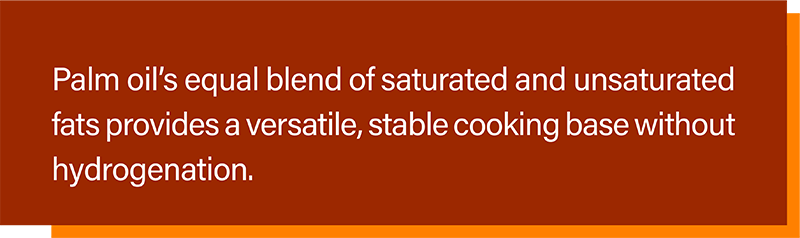
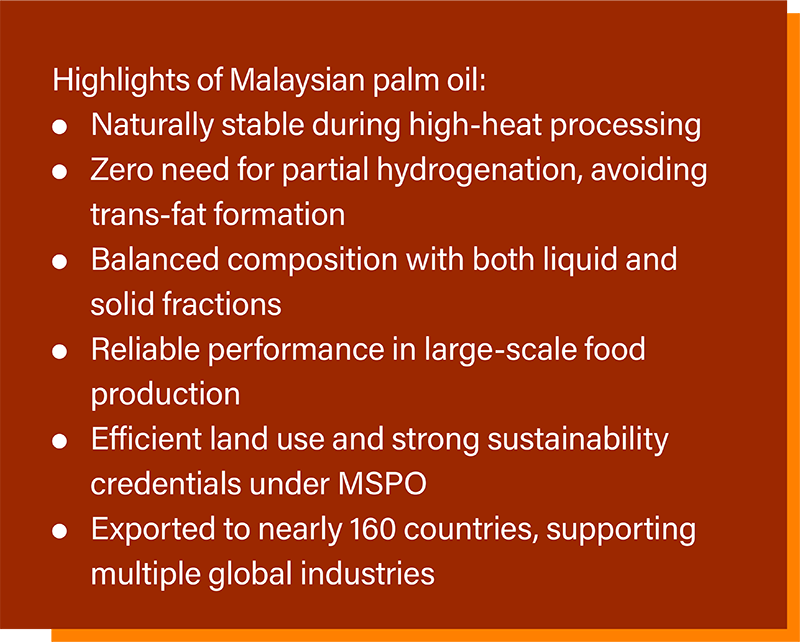
Palm oil supplies more than 30% of the world’s edible oils and fats and continues to play a central role in global food security. Its balanced fatty-acid profile, natural vitamin E tocotrienols, and absence of trans-fats make it an essential ingredient in both home cooking and large-scale food manufacturing.

Evidence at the Centre of Public Nutrition Messaging
A noticeable shift in global nutrition communication has been the emphasis on transparency and practical understanding. Research on balanced fats, vitamin E, and heat stability moved from laboratories to mainstream media, helping audiences see the science that underpins a widely used edible oil.
Palm oil’s functionality across food, household, and industrial applications is closely tied to its natural properties. According to food scientist Professor Tan Chin Ping from Universiti Putra Malaysia, these advantages explain why palm oil is used in everyday products, from breakfast cereals and ice creams to cosmetics and detergents. It is the most versatile and safest vegetable oil, and therefore one of the most widely consumed oils on the market.

Features across The Edge, BFM 89.9, CNN, The Economist, South China Morning Post (SCMP), Al Arabiya and family-audience platforms such as Upin & Ipin and Cartoon Network further demonstrated how credible health information gains traction when shared through familiar, trusted formats.
Nutritionist and Managing Director of the Malaysian Journal of Nutrition, Dr. Roseline Yap, outlines how balanced eating, supported by palm oil and smart portioning, can transform daily meals in Malaysian households. Her feature on SCMP bridges the science of health with the everyday act of cooking.
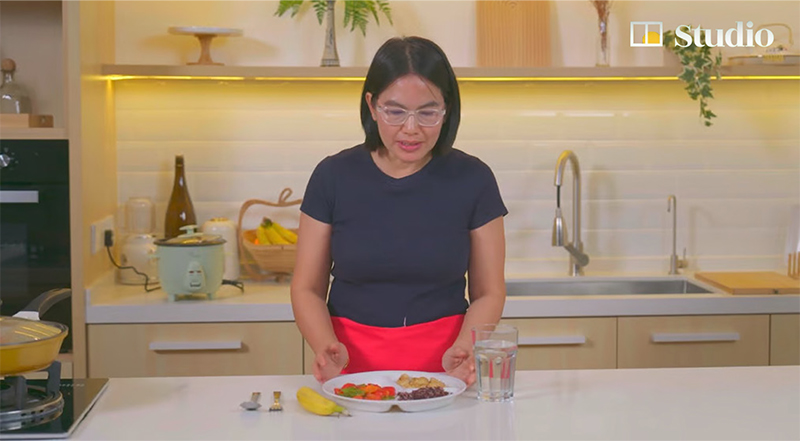
In SCMP’s feature, Dr. Roseline Yap shows how Malaysian palm-based ingredients can support nutritious, enjoyable meals in everyday homes.
These narratives did more than correct misconceptions. They created room for a more nuanced understanding of palm-based nutrition in regions where public debates had long been shaped by incomplete information.

Turning Research into Practice
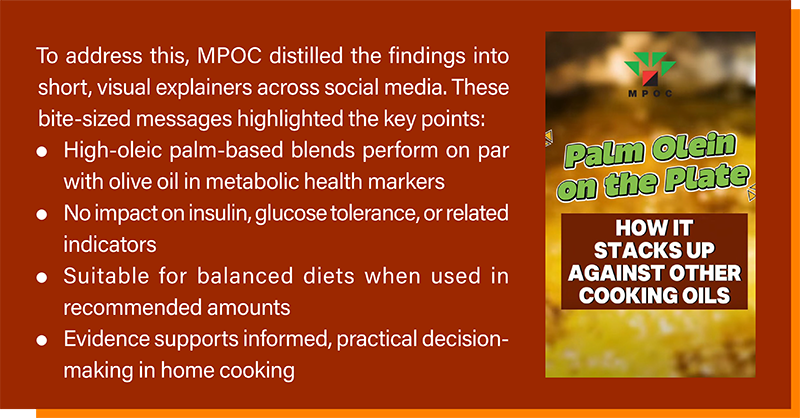
Scientific findings only influence behaviour when they are explained clearly. Technical insights from MPOB research were reshaped into formats that supported public understanding, from visual explainers to short-form videos. Some of the strongest engagement came from short-form educational content that turned scientific data into simple takeaways for everyday use.
Public Health Snapshot – Bite-Sized Research Explainer
A study comparing palm-based high-oleic cooking oil with extra virgin olive oil found no significant difference in markers of insulin resistance and glucose tolerance among overweight adults – yet the technical language is often complex for consumers to interpret.


Culinary Storytelling through Asian Food Network
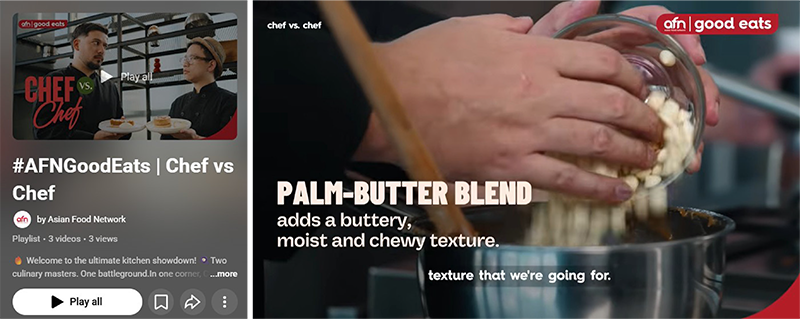
Public communication on nutrition also extended into culinary formats through MPOC’s partnership with Asian Food Network’s Chef vs Chef series. The programme brought palm oil into everyday cooking demonstrations, where chefs highlighted the oil’s functionality in practical, accessible ways.
The initiative combined television exposure across AFN, Discovery Channel SEA and India, as well as TLC SEA and India with digital and social content designed to reach viewers where cooking decisions are made. Audience engagement was supported by a campaign that delivered an estimated 2.2 million digital impressions across video and static posts.

Responding to a Changing Global Regulatory Landscape
As food systems evolve, regulators in Central Asia and Türkiye have begun signalling new standards for 3-MCPD, glycidyl esters, MOSH/MOAH, and trans fats, with similar attention expected across the wider MENA region. These developments underline the importance of maintaining nutrition communication that is accurate, science-led and aligned with emerging safety expectations. The new WHO guideline on ultra-processed foods reinforced this shift toward clearer dietary guidance. Markets are moving beyond single-ingredient debates toward a broader understanding of how foods are produced, consumed, and explained. In this context, nutrient literacy and verifiable research have become essential pillars of responsible communication.
Strengthening Advocacy in Nutrition-Sensitive Markets
Public health priorities continue to shape global demand for trustworthy nutrition information. Work supported by MPOC deepened engagements in India and Türkiye, two regions where evidence-based communication is essential. Expert-led events, targeted media outreach and partnerships focused on clear health messaging are expanding into markets with similar needs.
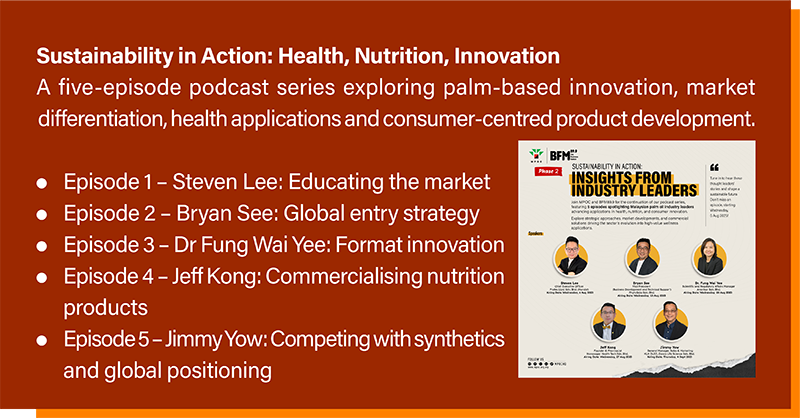
Advocacy also expanded through long-form storytelling, including conversational platforms that allow experts to explain product innovation, health applications, and market strategy in greater depth.

Food systems are becoming more complex, and nutrition remains one of the strongest forces shaping consumer expectations and regulatory priorities. In this environment, evidence serves as a public good. Transparent production, credible research and responsible communication guide public understanding of what a healthy diet includes. Sustainable Malaysian palm oil reflects these principles in practice. Through scientific clarity, expert engagement and real-world stories, it continues to hold its place in global nutrition discussions as a trusted, well-understood ingredient grounded in facts rather than assumptions.