Frequently Asked Questions (FAQ)
Your essential guide to the palm oil industry, covering nutrition and health, sustainability, environmental impact, and industry best practices.
Acknowledgement: Haniza Ahmad, Nur Azwani Ab Karim, SD Guthrie Technology Centre Sdn Bhd.

PALM oil is more than a global cooking staple – it is increasingly positioned as a vehicle for better nutrition. Fortifying palm oil with essential vitamins such as A and D has emerged as one of the most cost-effective strategies to address micronutrient deficiencies, particularly in regions where “hidden hunger” continues to affect children and vulnerable groups1-3. For industry peers, governments, and investors, this represents both a public health opportunity and a pathway to reinforce the role of palm oil in sustainable food systems.
Palm oil is widely consumed across Asia, Africa, and emerging markets, reaching populations across all income levels. It exhibits high oxidative stability and is naturally compatible with fat-soluble vitamins, such as A and D. This makes it a cost-effective and scalable delivery vehicle for addressing hidden hunger4.

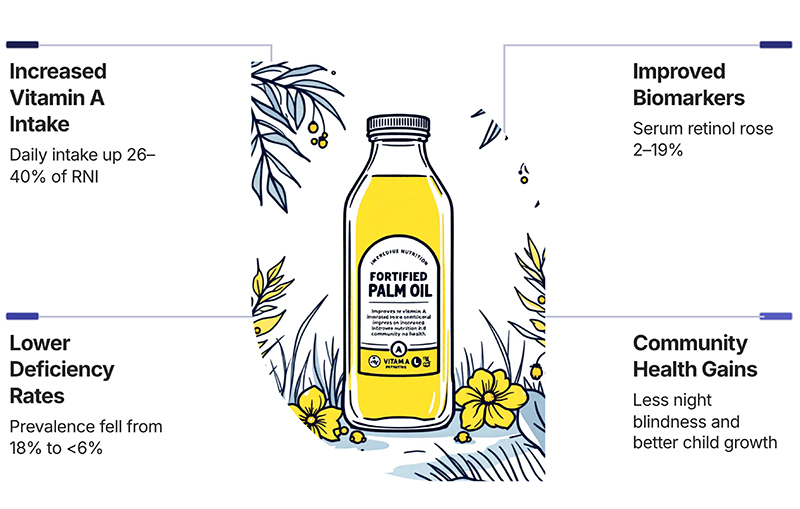
Evidence from studies shows that vitamin A-fortified palm oil increased daily intake by 26% to 40% of the RNI, raised serum retinol by 2% to 19%, and reduced deficiency prevalence from 18% to below 6%. Community programmes also reported reduced night blindness, stronger immunity and better child growth outcomes5.
Despite abundant sunlight, studies show that more than 90% of pregnant Malaysian women and many children are vitamin D-deficient. Vitamin D fortification in oils has been proven to improve bone mineral density, immune markers and reduce the risk of chronic diseases6-8.

Stability is achieved through antioxidants, microencapsulation, and UV-protective packaging. Research shows that mildly oxidised palm oil retains ~90% of vitamin A after 60 days, whereas poor packaging or high oxidation can cause up to 46% nutrient loss9.
Fortification supports SDG 2 (Zero Hunger) and SDG 3 (Good Health and Well-being) by addressing micronutrient deficiencies at a large scale. It enhances palm oil’s sustainability credentials by linking health outcomes with responsible production and nutrition innovation10.

Fortified oils offer market differentiation as “better-for-you” products, catering to the growing demand of health-conscious consumers. By meeting fortification mandates and aligning with global nutrition policies, Malaysia can position palm oil as not only functional and sustainable, but also as a solution for global health and wellness11-12.
