Beyond Compliance: Malaysia's Proactive Path in Sustainable Palm Oil
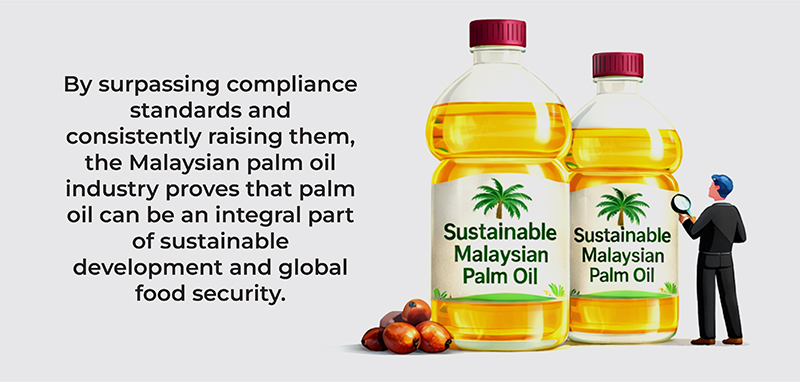
Malaysia is doubling down on sustainable palm oil, driven by national standards and climate accountability.
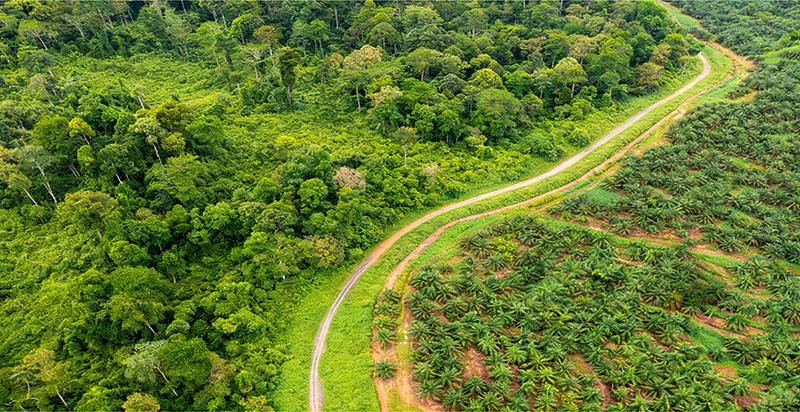
The picture shows a clearly defined boundary between oil palm cultivation and the adjacent forest area, reflecting established land-use planning and conservation buffers within plantation landscapes.
GLOBAL expectations for agricultural commodities continue to evolve. Buyers increasingly demand traceability, emissions data, and clear evidence of responsible land management. Regulatory developments in major markets, including the European Union Deforestation Regulation (EUDR), have added further complexity to international trade.
For Malaysia’s palm oil industry, these developments do not define its direction. Sustainability reforms have been underway for years, anchored in national policy, mandatory certification, and structured industry transformation.
While external regulations may shift or be debated, Malaysia’s sustainability framework remains consistent. The focus is on strengthening domestic systems, expanding certification coverage, and improving measurable climate performance across the supply chain.
Rather than reacting to individual regulatory frameworks, the industry is advancing a long-term strategy built on national standards, operational efficiency and verifiable performance.
This approach reflects a broader principle: sustainability leadership must be internally driven and structurally embedded, not externally prescribed.
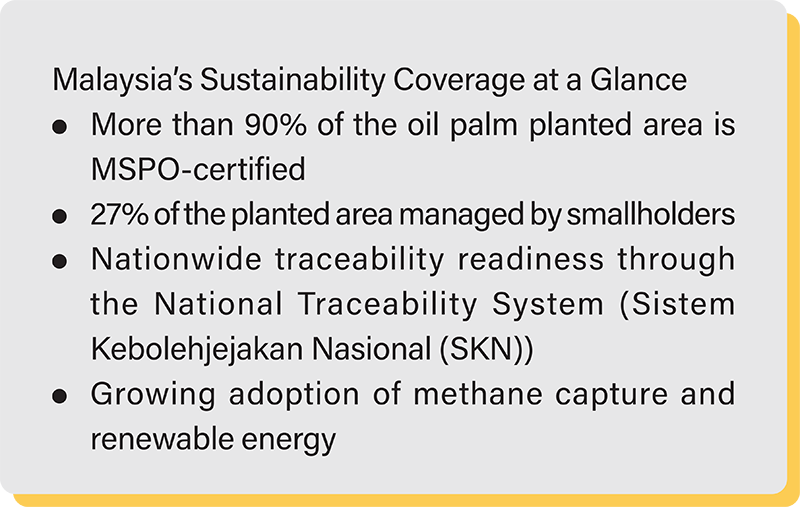
Malaysia’s sustainability framework operates within a nationally implemented certification structure that applies across the palm oil supply chain.
The Malaysian Sustainable Palm Oil (MSPO) certification scheme is implemented nationwide, creating a consistent set of environmental, legal, and operational requirements across estates, mills, and smallholder farms.
Smallholders account for approximately 27% of Malaysia’s planted oil palm areas and are integrated into the certification system through coordinated training, group certification models, and mapping systems to support traceability and compliance at scale.
Today, more than 90% of Malaysia’s oil planted area is MSPO-certified under the national standard. This broad coverage creates a consistent baseline across estates, mills, and smallholder farms.
The value of this structure lies in its reach. When sustainability requirements extend across the supply base, improvements in environmental management, documentation, and monitoring become operational practice rather than isolated initiatives
This foundation allows producers to focus on measurable performance improvements in emissions, efficiency and transparency.
Strengthening Traceability and Transparency
Traceability is now a baseline expectation in sustainable commodity trade. Malaysia has invested in digital systems that enable palm oil to be traced to the plantation level through geospatial mapping and integrated supply chain records. These systems support transparency, accountability and verification against deforestation risks.
With traceability implemented nationwide, Malaysia’s palm oil supply chain operates under structured documentation and due diligence processes. As regulatory frameworks evolve across markets, producers continue to maintain consistent reporting and verification practices. This continuity provides buyers with assurance that Malaysian palm oil meets prevailing market requirements, independent of shifting policy timelines.
Advancing Climate Performance Through Measurable Action
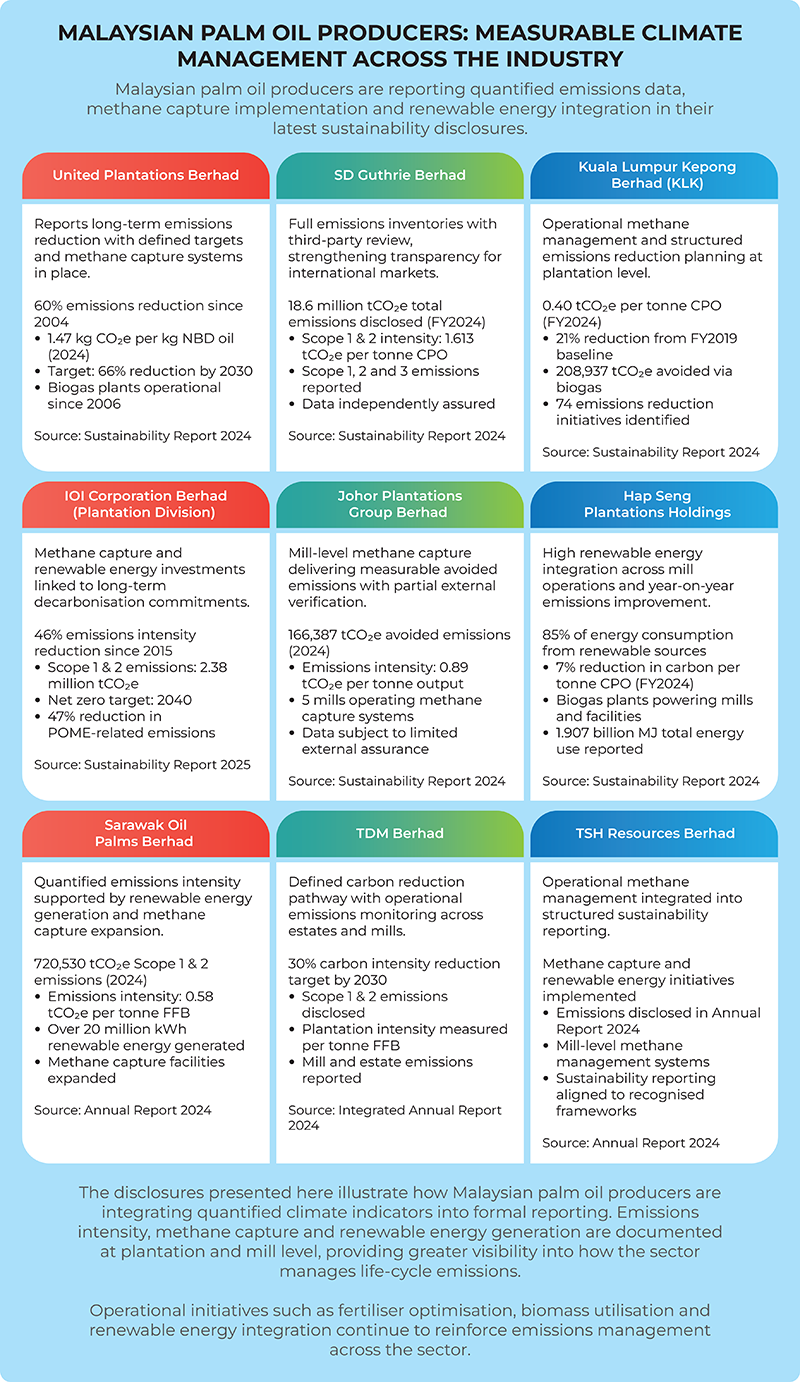
With traceability and certification frameworks established, attention is increasingly focused on reducing life-cycle emissions and improving operational efficiency across the value chain.
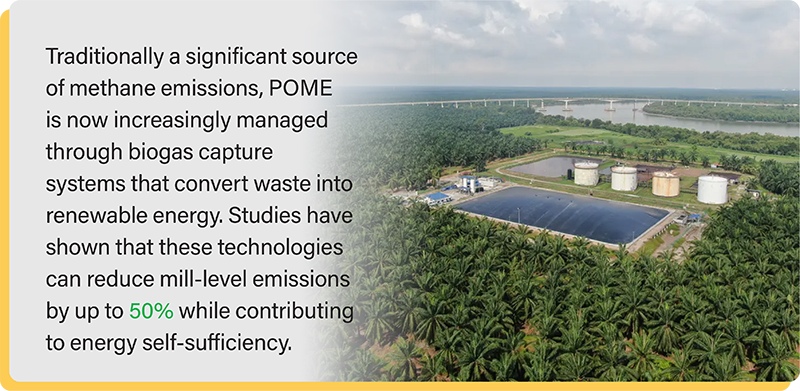
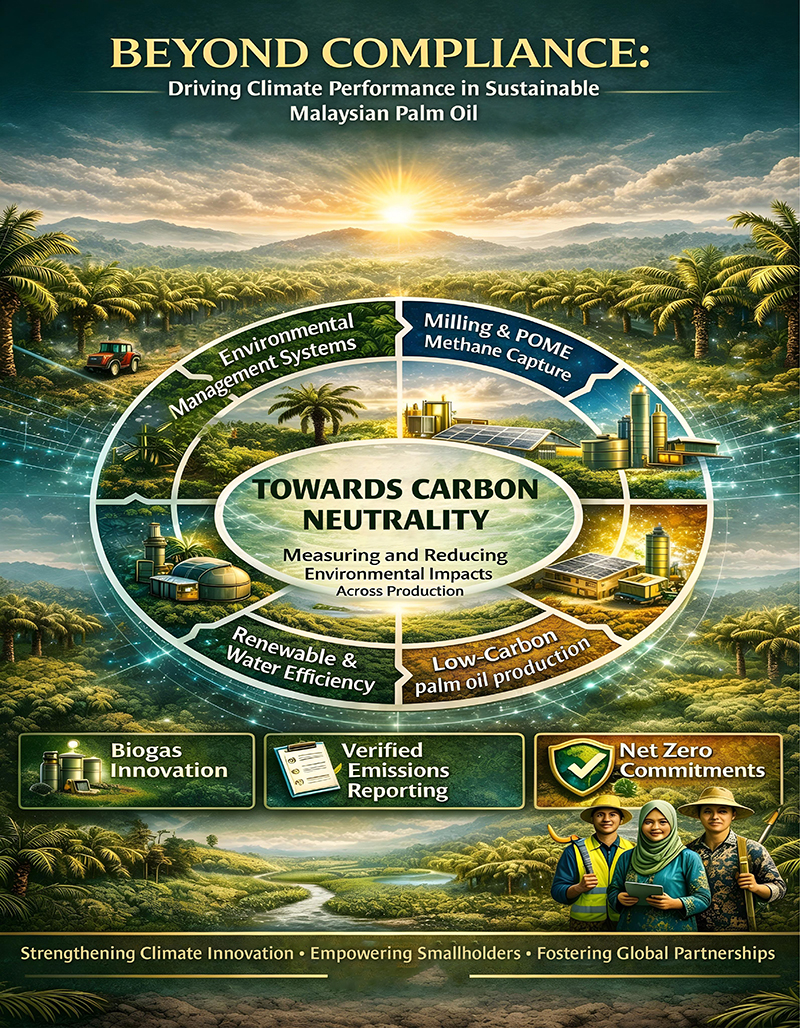
As the Malaysian palm oil industry advances its net-zero ambition, the reduction of greenhouse gas (GHG) emissions has become a central operational priority across plantations and mills. Achieving net zero requires a clear understanding of emission sources throughout the value chain from field activities to processing operations. Analytical tools, including life cycle assessments (LCA), support this effort by helping producers quantify emissions hotspots such as methane from palm oil mill effluent (POME), diesel use in field operations, and fertiliser-related nitrous oxide emissions.
Ensuring Inclusive and Equitable Sustainability
Smallholders remain central to Malaysia’s palm oil landscape, and their inclusion is essential to achieving nationwide sustainability. Recognising the challenges small farmers face in meeting complex technical requirements, Malaysia has prioritised capacity building and support mechanisms. These include group certification models, training programmes, digital mapping tools and targeted financial assistance.
These initiatives have helped smallholders understand both the requirements and benefits of sustainable practices. Better farm management, higher yields and access to premium markets demonstrate that sustainability can enhance livelihoods rather than diminish them. By involving smallholders in the equation, Malaysia strengthens both social outcomes and supply chain integrity.
Positioning Malaysian Palm Oil for the Future
Malaysia’s sustainability strategy depends on three interconnected pillars: climate innovation, smallholder inclusion and active global engagement. These components work together to strengthen the country’s role as a responsible palm oil producer and a constructive partner in global sustainability efforts.
As markets increasingly prioritise transparency, low-carbon supply chains, and social responsibility, Malaysia’s proactive approach provides a compelling value proposition.